The Fort Meade Alliance plays a critical role in strengthening the workforce pipeline, connecting industry, government, and education to ensure the future of innovation around Fort Meade remains strong. TechMania is a natural extension of that mission: giving students a practical, inside look at how STEM careers actually take shape.
ADG brought a creative, experience-driven perspective that complements the technical focus students often associate with STEM.
While many TechMania sessions traditionally highlight engineering, coding, or robotics, ADG’s session focused on how ideas become usable, effective solutions in the real world. Led by Mary Wilcox, Executive Creative Director, and Laura Rittenhouse, Senior UX Designer, the session introduced students to the thinking behind experience design, UX/UI, and human-centered problem-solving.
Linda Rochelle, ADG’s Senior Creative Program Manager, originally learned about the TechMania event and thought it would be a great opportunity to engage with our local youth community.
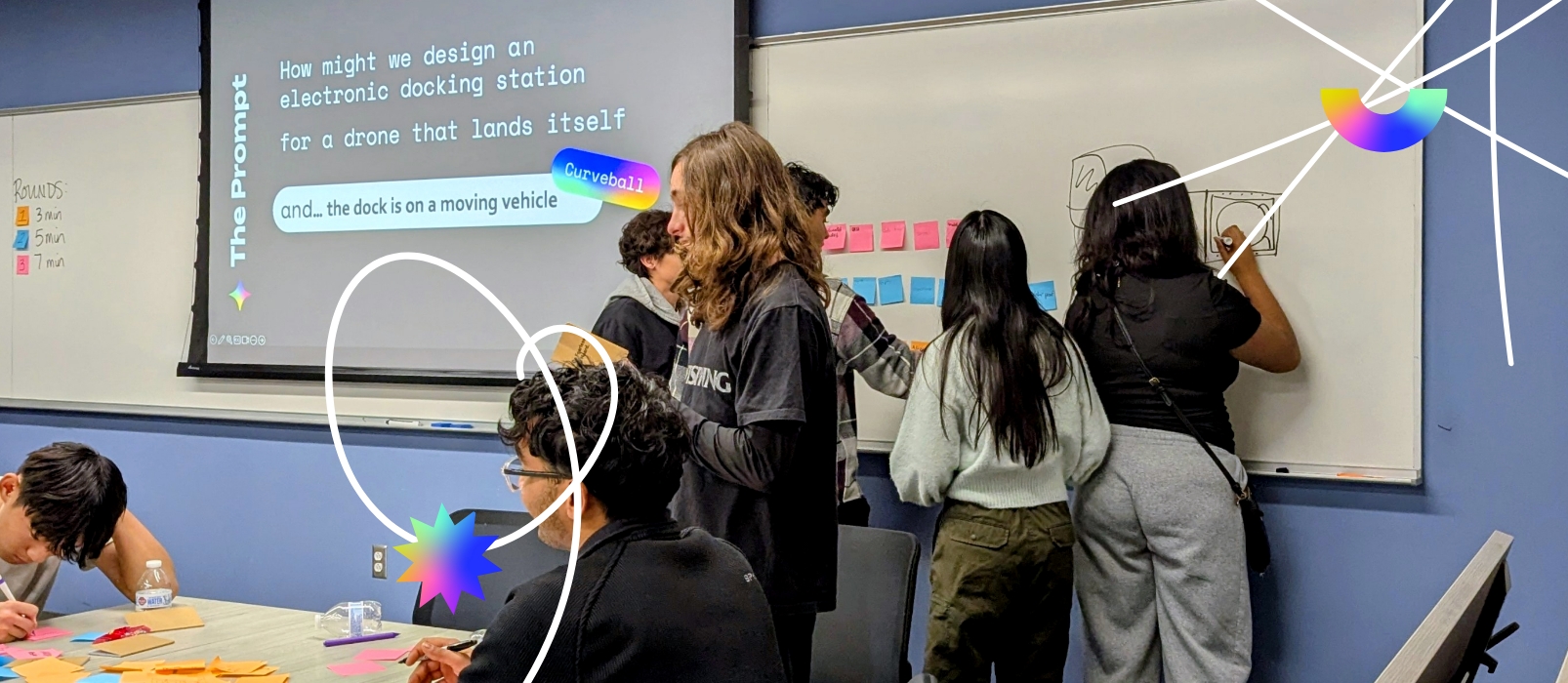
To bring those ideas to life, each 40-minute session was structured as a fast-paced design challenge. Students were divided into small teams and given a simple starting prompt:
Design an electronic docking station.
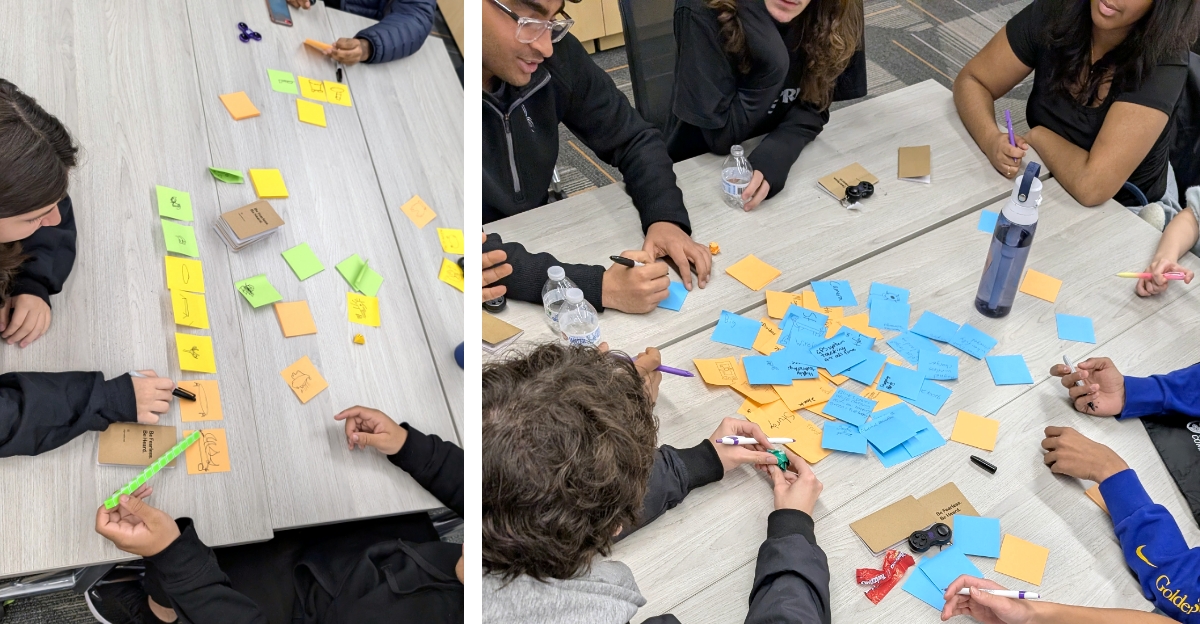
Armed with sticky notes and markers, teams had three minutes to ideate as many features and functions as possible—thinking broadly about what a docking station might need.
Then came the first curveball.
The docking station wasn’t for just any device. It was for a drone that lands itself.
Teams were given five minutes to reassess their work. Which ideas were still valid? What needed to change? What new considerations had suddenly become essential? Importantly, students weren’t allowed to throw everything out and start over. A minimum number of ideas had to carry forward, forcing them to adapt rather than reset.
Just as teams found their footing, another twist:
The docking station needed to function on a moving vehicle.
That’s when the energy in the room shifted. Students began exploring magnetic systems, locking mechanisms, GPS coordination, lighting for visibility, tracking systems, and even rethinking the dock itself as an active, moving platform designed to meet the drone where it was. Some concepts leaned highly technical, while others embraced creativity and whimsy. It was exciting to see how every team approached the problem differently.
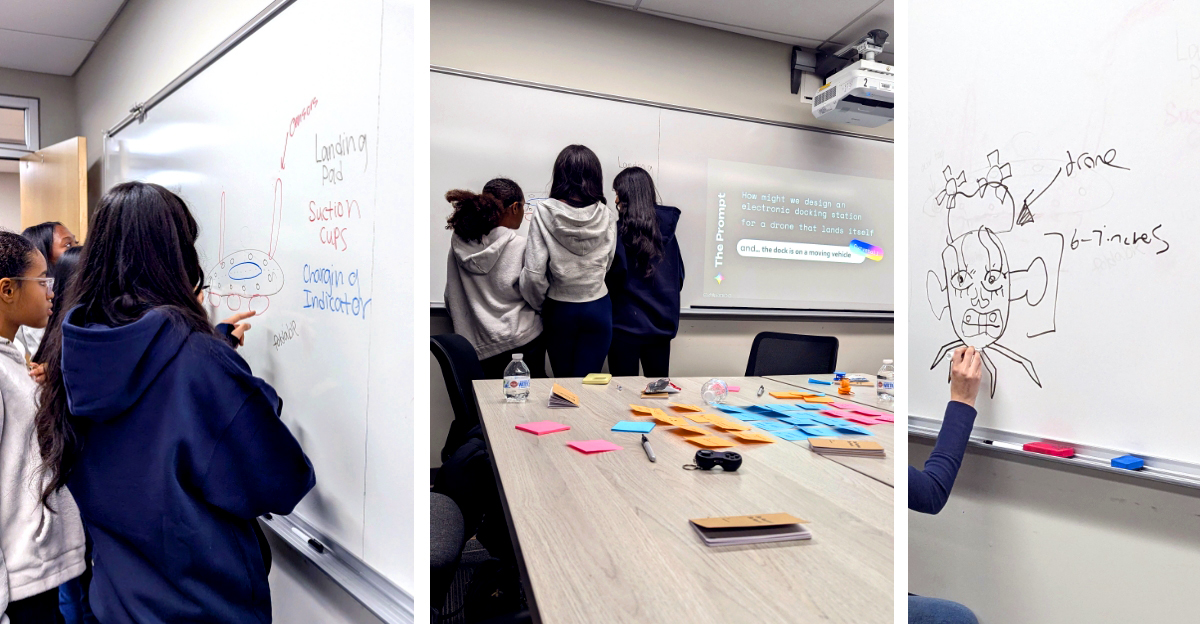
As ideas expanded, students also had to streamline by removing features that no longer made sense and identifying what was truly essential to their final concept. Teams then pitched their solutions to the rest of the group, focusing not only on what they designed, but why.
Throughout the exercise, the ADG team connected the dots to real-world experience design challenges:
The group discussed how stronger intake and requirements gathering might have reduced some of the impact of the curveballs and produced better, more streamlined outcomes. Students were also introduced to a common prioritization method used in product design: mapping feasibility versus impact. High-impact, high-feasibility ideas rise to the top, while low-impact or difficult-to-implement features often move to a backlog.
This is the same mindset ADG brings to client work every day.
Whether designing a complex cyber platform, a healthcare application, or a recruitment experience, ADG starts by asking the right questions: Who is this for? What problem are we solving? What does success look like? From there, we design experiences that are purposeful, usable, and aligned with real needs.
TechMania offered a condensed version of that process, showing students that innovation isn’t just about building technology, but about designing how people interact with it.
For ADG, participating in events like TechMania isn’t just community engagement. It’s an opportunity to invest in up-and-coming thinkers, designers, and problem-solvers. We were honored to introduce these students to experience-driven design and show how human-centered thinking is essential to the future of STEM.